Are Coworking Spaces Worth It?
April 28, 2026
Coworking spaces have become a defining feature of the modern work landscape. As remote work, hybrid teams, and flexible business models continue to evolve, professionals are reassessing what they actually need from an office space. The traditional model of long leases and fixed locations no longer fits many of today’s companies or independent workers.
This shift has led to a practical question that continues to come up for startups, remote workers, and established teams alike: Are coworking spaces worth it? The answer depends on how value is defined in a working environment, including productivity, flexibility, access to resources, and long-term adaptability.
What Does Worth It Really Mean in a Workspace?
When people ask whether coworking spaces are worth it, cost is often the first consideration. However, price alone does not determine value in a workspace decision. A more accurate measure includes how a space supports daily performance, reduces friction in work routines, and enables professional growth.
Working from home may appear cost-effective, but it often introduces challenges such as inconsistent structure, blurred boundaries between personal and professional life, and limited opportunities for in-person collaboration. Coffee shops provide an alternative environment, but they are not designed for sustained professional work and can lack reliability, privacy, and meeting infrastructure.
Traditional office space offers stability, but it comes with long-term leases, higher overhead, and limited flexibility. Coworking spaces sit between these options by offering a structured environment that remains adaptable to changing needs.
Flexibility That Supports Changing Work Needs
One of the strongest advantages of coworking spaces is flexibility. Businesses and professionals are no longer tied to long-term office commitments that may not reflect their growth trajectory or current team structure.
Coworking memberships allow individuals and companies to scale their space usage up or down as needed. This makes it easier for startups to grow without the pressure of expanding into a permanent office too early. It also allows established teams to maintain a presence in multiple areas without committing to multiple long-term leases.
This flexibility is especially valuable in fast-moving industries where team size, client needs, and project demands can shift throughout the year.
A Work Environment Designed for Focus
Productivity is one of the most common reasons professionals transition into coworking spaces. Working from home often comes with interruptions that make it difficult to maintain consistent focus. Shared workspaces are designed specifically to address this issue by separating professional environments from personal spaces.
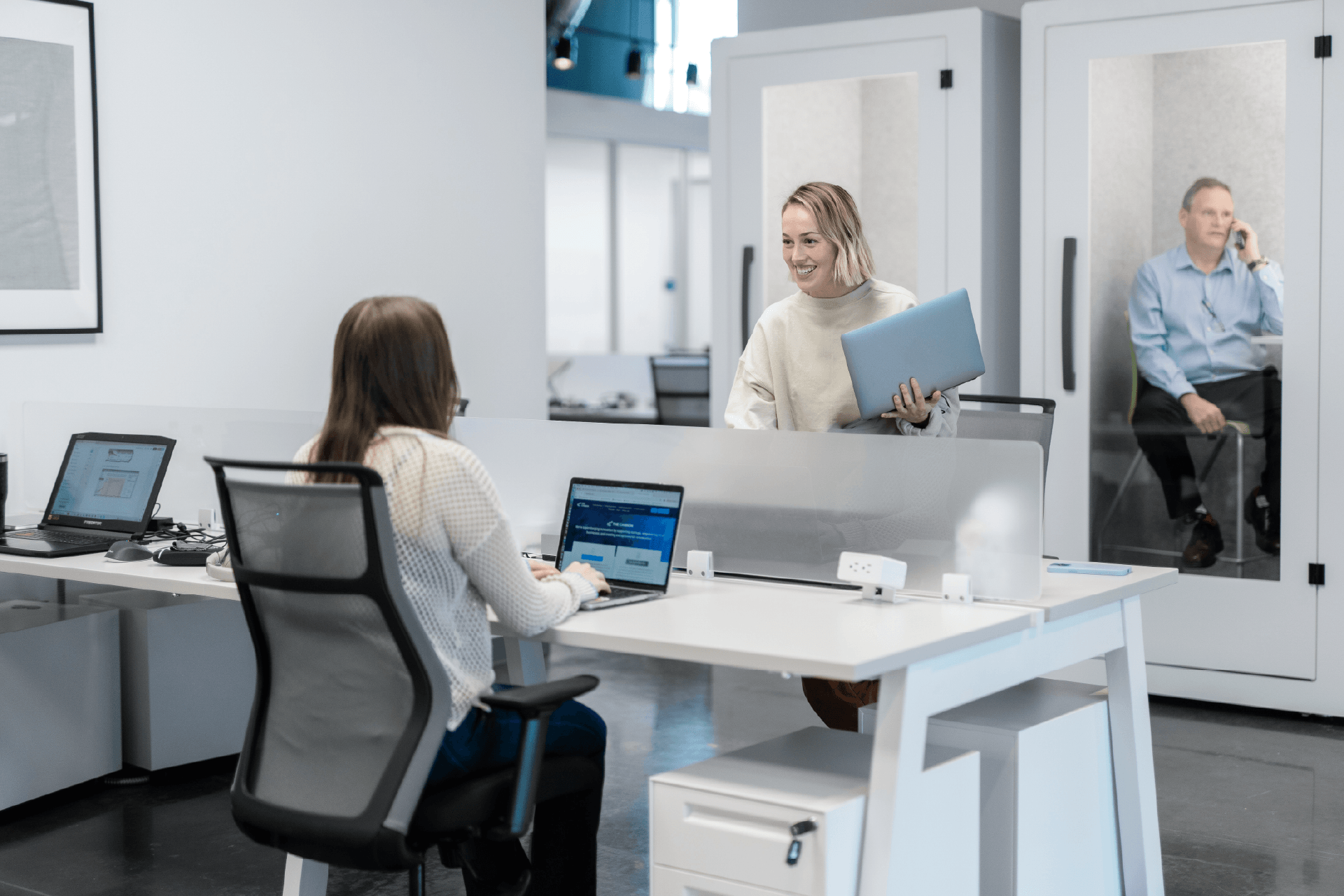
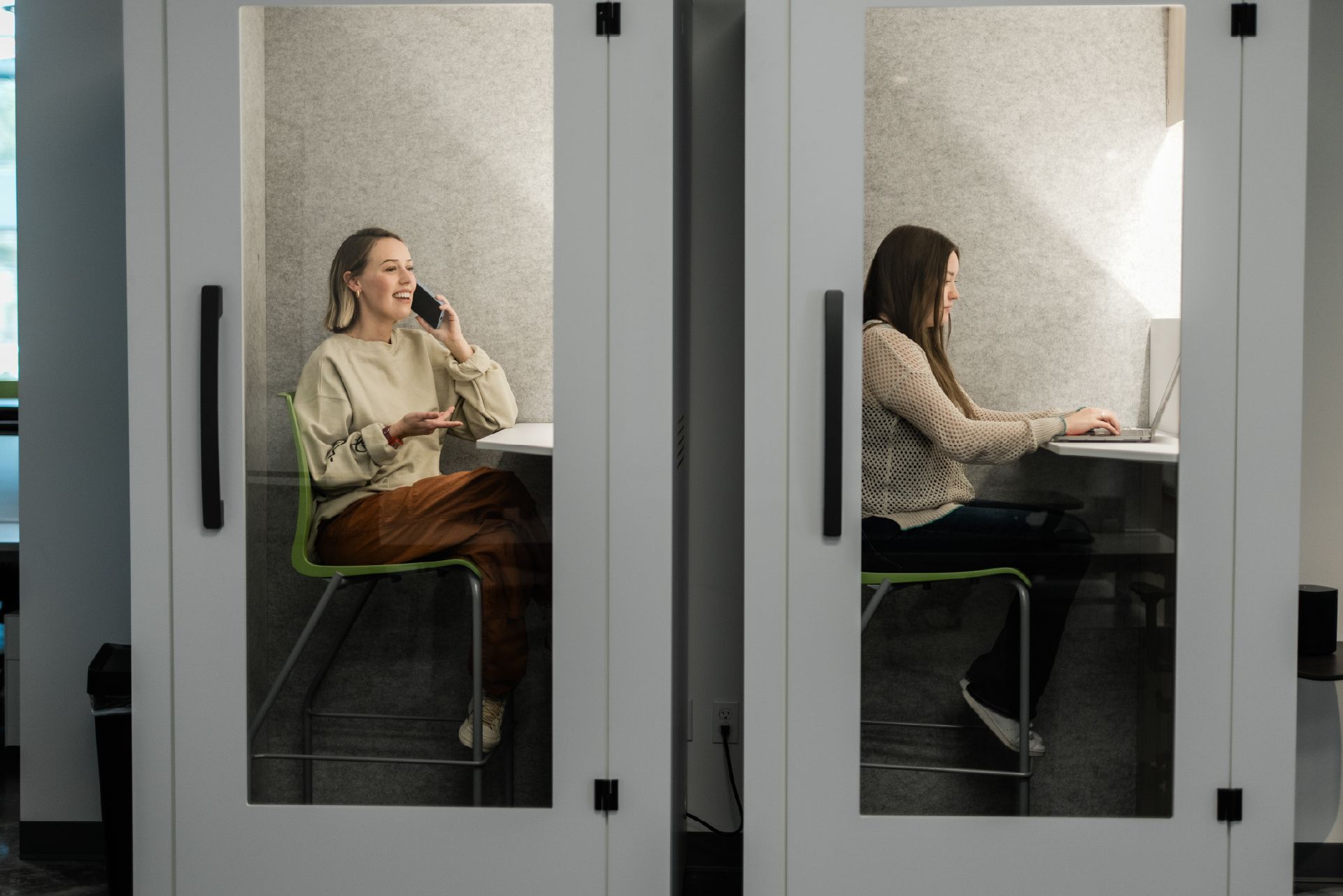
Coworking spaces typically offer a range of work settings, including dedicated desks, private offices, and quieter areas intended for focused work. This structure helps individuals build routine and consistency into their workday, which can improve output and reduce the mental strain that comes from constant context switching.
Unlike working in public spaces, coworking environments also provide reliable internet, professional seating, and infrastructure that supports long work sessions.
Community & Professional Connection
Another important factor in evaluating whether coworking spaces are worth it is the role of community. Remote work can sometimes limit opportunities for spontaneous collaboration or professional interaction. Coworking spaces reintroduce that element by bringing together professionals from different industries in a shared environment.
These spaces often lead to organic networking, not through forced interaction but through consistent presence and proximity. Over time, this can result in business relationships, partnerships, and client opportunities that might not develop in isolated work settings.
For many professionals, the value is not only in who they meet directly but also in being part of a broader ecosystem of entrepreneurs, creatives, and business leaders working alongside them.
Resources That Reduce Operational Complexity
Coworking spaces also reduce the need for businesses to manage their own office infrastructure. Meeting rooms, printing services, reception areas, and shared amenities are typically included in membership access. This eliminates the need to source, manage, and maintain these resources independently.
For small businesses and startups in particular, this can significantly reduce operational complexity. Instead of dividing attention between business growth and office management, teams can focus on core work while relying on the coworking space to handle day-to-day infrastructure needs.
Work-Life Balance & Mental Clarity
One of the less visible but highly important benefits of coworking spaces is the impact on work-life balance. Working from home can make it difficult to separate professional responsibilities from personal time. Over time, this can contribute to burnout or reduced productivity.
Coworking spaces help create a clearer boundary between work and home life. The act of commuting to a dedicated workspace, even for a short distance, helps establish routine and signals the start and end of the workday. This structure supports better mental health and can make it easier to fully disengage from work outside of office hours.
Common Concerns About Coworking Spaces
There are several misconceptions that often come up when people evaluate coworking spaces. One is the assumption that they are too expensive compared to remote work. While there is a membership cost, this view often overlooks what is included, such as utilities, infrastructure, meeting space access, and professional environment design. When these factors are considered together, coworking can replace multiple separate expenses.
Another concern is distraction. While shared environments may seem busy, most coworking spaces are intentionally designed with different zones that support different working styles. Quiet areas, private offices, and collaborative spaces allow individuals to choose environments that match their tasks throughout the day.
There is also the idea that coworking spaces are only useful for freelancers or early-stage startups. In reality, many established companies use coworking spaces for satellite teams, hybrid work arrangements, and expansion into new markets without committing to traditional office leases.
Coworking In Houston’s Evolving Work Landscape
Houston continues to experience growth in remote and hybrid work across industries such as energy, healthcare, technology, and professional services. As the city expands geographically, commuting challenges and office accessibility have become increasingly relevant in workspace decisions.
Coworking spaces offer a practical solution by allowing professionals to work closer to where they live or meet clients, rather than being tied to a single central office location. This shift supports both efficiency and flexibility, particularly in a city with a wide geographic footprint like Houston.
The Cannon’s Role In Houston Coworking
The Cannon has expanded significantly across Houston, offering multiple workspace locations that reflect the changing needs of modern professionals. Instead of limiting members to a single site, The Cannon provides access across its network of spaces, allowing individuals and teams to work where it makes the most sense on any given day.
Membership options are structured to support different stages of business growth. Some members prioritize flexible access as they transition away from home offices, while others require dedicated desks or private office space for established teams. This tiered approach allows members to grow within the same ecosystem rather than outgrowing their workspace provider.
As The Cannon has expanded over the years, it has also strengthened its role as part of Houston’s broader entrepreneurial infrastructure. It is not only a place to work, but a connected network that supports business development and professional growth across industries.
Determining if Coworking Spaces are Worth It
Coworking spaces are worth it for professionals and teams that need structure, flexibility, and access to a professional environment without the long-term commitment of traditional office space. They offer a balanced solution for individuals working remotely, businesses scaling their operations, and teams looking for more adaptive workspace options.
In a city like Houston, where work styles continue to evolve, coworking has become a practical and sustainable alternative to both working from home and maintaining a fixed office lease.